
When you choose the hard board for your storage box, you significantly enhance the strength of your box. The right board helps your wooden storage box remain sturdy and last longer, while also keeping it looking nice. You should check thickness, moisture resistance, weight capacity, and finish. Look at this table to see how these factors affect the longevity of your box:
| Property | Impact on Durability and Lifespan |
|---|---|
| Moisture Resistance | Stops warping and swelling, so your box lasts longer |
| Structural Stability | Provides a strong base, making your box more durable |
| Ease of Installation | Simplifies setup, ensuring your box functions well |
You can feel confident about choosing the best storage box for your needs.
Key Takeaways
- Pick the right hard board to make your storage box strong and long-lasting. Think about how thick the board is, if it can handle water, and how much weight it can hold.
- Choose the material based on what you want to store. Thick boards like plywood or MDF are good for heavy things. Thin boards like E-Flute are fine for light things.
- Make sure the board can resist water so it does not bend or get ruined. Use boards with waterproof layers for boxes that will be in wet places.
- Change your storage box to fit your needs. Many companies can cut and line boards to match what you want.
- Put safety and the environment first. Pick boards that do not give off a lot of bad gases. This keeps people safe and helps the planet.
Choose the Hard Board for Storage Boxes
Types of Hard Board Materials
When you choose the hard board for your wooden storage box, you want to know what materials work best. Each type has its own strengths. Here’s a quick look at the most common options:
| Material Type | Description |
|---|---|
| Engineered Wood | Particle board, used widely in storage solutions. |
| Wood Composite | Similar to engineered wood, often in cube storage. |
| MDF (Medium Density Fiberboard) | Heavy and durable, great for storage boxes. |
You can also find these options for lining your box:
- Heritage® Archival Corrugated Board: Strong and rigid, perfect for support panels.
- E-Flute Cardboard (1.6mm): Thin and easy to fold, good for decorative boxes.
- E-PLUS Flute Cardboard (1.7mm): Heavier, adds strength.
- B-Flute Cardboard (3mm): Standard for shipping boxes.
- BB-Flute Cardboard (6mm): Double layer, very strong for high-load storage.
If you need a high load-bearing box, consider BB-Flute or MDF. For lighter items, E-Flute or E-PLUS Flute works well. Always match the material to your storage needs.
Pros and Cons for Wooden Storage Box Use
You want your wooden storage box to last and look good. Let’s compare the main materials:
| Material | Advantages | Disadvantages |
|---|---|---|
| MDF | Sturdy, moisture-resistant, affordable, smooth finish, easy to paint. | Heavy, can sag under heavy loads, not for high heat, easy to damage when sanding. |
| Solid Wood | Very durable, classic look, adds value, customizable. | Needs sealing, can expand/contract, risk of pests, sensitive to moisture. |
If you want the best plywood for a high-end look and strength, solid wood or thick plywood is a smart choice. For budget-friendly projects, MDF or engineered wood works well. Always check your selection checklist before you decide.
Customization and Cutting Options
You may need a custom size or shape for your box. Most hard boards can be cut to fit your exact needs. Many storage box manufacturers and OEM/ODM suppliers offer custom cutting and lining services. This helps you get the perfect fit for your household storage box or high-load storage box.
Tip: When you choose the hard board, ask your supplier about customization. Custom linings can make your box stronger and more attractive. If you want to stand out, consider adding a special finish or logo for your brand.
A good selection checklist will help you compare options and make the right choice. If you need help, reach out to a storage box manufacturer for advice on storage box material selection and storage box customization.
Key Factors for the Best Wooden Storage Box Lining
Thickness and Load Capacity
You want your storage box to be strong. It should not bend or break. The thickness and density of the hard board matter. They decide how much weight your box can hold. If you store heavy tools or books, pick a thick board. It needs high hardness. For lighter things like clothes or toys, a thin board is fine.
Check this table. It shows how box size and cutout area change strength:
| Box Size (mm) | Cutout Area (%) | Average Compression Force (N) |
|---|---|---|
| 400 × 300 × 300 | 0% | 2651 ± 39 |
| 200 × 300 × 300 | 64% | 614 ± 19 |
| 600 × 300 × 300 | 4% | Minimum average compression |
If you need a big household storage box for large items, use a thick board. It should have high janka hardness. This gives you a strong box for heavy storage. For small boxes, thin boards work. Always check what you will store. Customization is possible. storage box manufacturer and storage box OEM/ODM suppliers can change thickness for you.
Moisture and Warp Resistance
Moisture can damage your storage box. In wet places, boards can bend, swell, or rot. You want your things to stay safe and dry. Moisture resistance is important. It matters for boxes in basements, kitchens, or bathrooms.
Moisture-resistant coatings protect the hard board lining. These coatings keep water out. Your box lasts longer. Tests show these treatments stop damage. They keep the board strong in tough places. If you need a box for a damp room, ask your supplier about moisture resistance. For storage box material selection, match the board to your space.
Tip: For extra safety, pick a board with a waterproof finish. This is smart for storage box customization in humid areas.
Surface Finish and Appearance
How your storage box looks is important. This matters if you use it in your living room or office. A smooth finish makes your box look nice. The right finish also protects the board from scratches and stains.
You can choose many finishes. Paint, laminate, or natural wood grain are options. For a modern style, pick glossy laminate. For a classic look, choose hardwood with a natural finish and high janka hardness. If you want branding, many storage box manufacturer offer custom printing or logos. Customization lets you match the box to your brand or home.
Note: A good finish looks nice and makes your box stronger and harder.
Safety and Environmental Considerations
Safety is important when picking materials for your storage box. You want to avoid bad chemicals. Make sure your box meets safety rules. Look for boards with certifications.
Here is a table of important standards:
| Aspect | Description |
|---|---|
| Standard | ASTM D5118/D5118M-25 |
| Significance | Covers safety and environmental considerations for fiberboard shipping boxes |
| Scope | Addresses fabrication, liners, and sleeves |
| Safety Note | Users must check safety, health, and environmental practices |
Some boards release formaldehyde. This can cause health problems. Check the emission limits for each material:
| Material Type | Emission Limit (ppm) |
|---|---|
| Hardwood Plywood | 0.05 |
| Medium-Density Fiberboard | 0.11 |
| Thin Medium-Density Fiberboard | 0.13 |
| Particleboard | 0.09 |
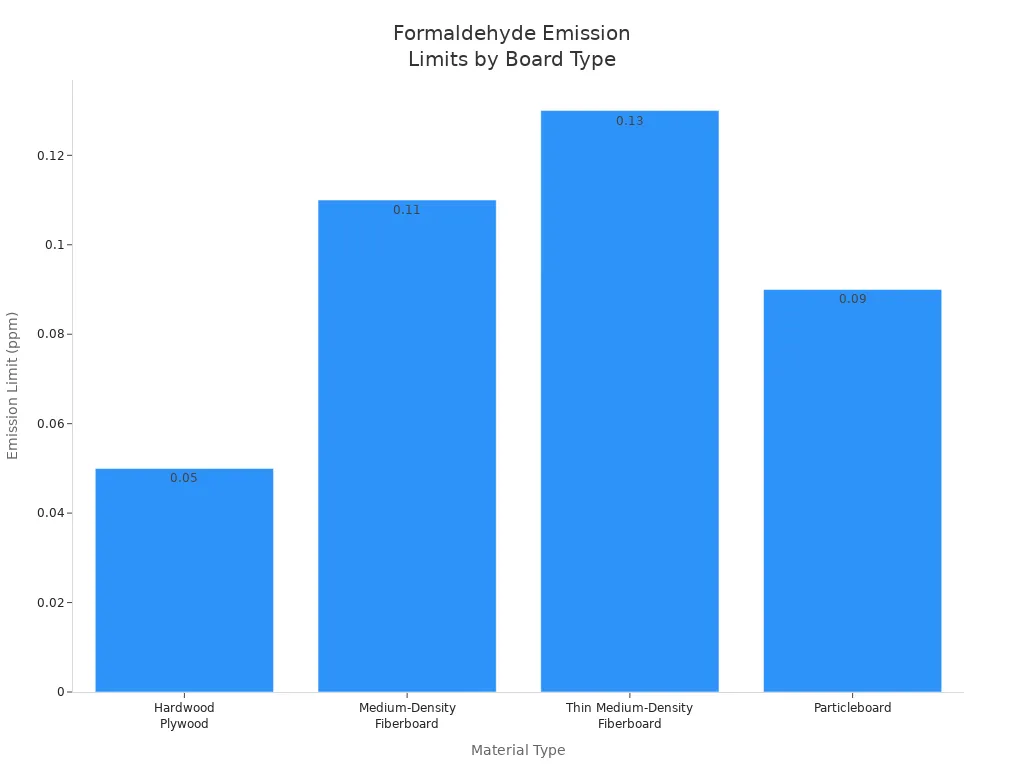
Formaldehyde can irritate your eyes and nose. It can cause headaches and worse health issues. If you want a safe box for kids or sensitive items, pick hardwood or low-emission boards. Always ask your supplier about certifications and emissions.
Remember: You can customize your box. Ask for eco-friendly materials or special finishes. storage box OEM/ODM suppliers can help you meet safety and environmental goals.
Compare Hard Board Options
Material Comparison Table
You need to pick the best hard board for your storage box. Here is a table that shows how popular materials are different. It helps you see which one is strong, costs more, or works best for your needs.
| Material | Durability | Moisture Resistance | Cost | Best Use Case |
|---|---|---|---|---|
| Plywood | High | High | $$$ | Long-term storage, high-load boxes |
| MDF | Moderate | Moderate | $$ | Decorative boxes, smooth finishes |
| Particle Board | Low | Low | $ | Light storage, short-term use |
| Standard Hardboard | Low | Low | $ | Temporary liners, backing plates |
| Tempered Hardboard | Moderate | Moderate-High | $$ | Door panels, moderate storage |
| HDF | High | Moderate | $$$ | Structural supports, premium boxes |
Plywood is very strong and does not get damaged by water. It is good for heavy things or if you want to use the box for a long time. MDF is smooth and looks nice, so it is great for pretty boxes. Particle board is cheap but only works for light things or short use. If you need extra support, HDF or tempered hardboard are good choices.
Quick Selection Checklist
Are you unsure which board is right for your box? Use this checklist to help you decide:
- What will you put in the box?
- Heavy tools or books? Pick plywood or HDF for strength.
- Clothes or toys? MDF or particle board is fine.
- Where will you keep the box?
- In a wet place like a basement or kitchen? Use plywood or tempered hardboard.
- In a dry room? MDF or particle board will work.
- How long do you want the box to last?
- More than 5 years? Choose plywood, HDF, or acid-free chipboard.
- For a short time? Standard hardboard or particle board is enough.
- Do you want a special look or logo?
- Ask your supplier about custom finishes or adding your logo.
Tip: If you need a strong box or want your brand on it, talk to a storage box manufacturer or storage box OEM/ODM supplier. They can help you pick the right storage box material selection and do storage box customization for you.
Are you ready to make your storage better? Try customizing your next box for more strength and style.
Step-by-Step Guide to the Best Choice
Assess Storage Needs
You want your storage box to fit your life. Start by thinking about what you plan to store. Heavy tools or books need a strong box. Light items like clothes or toys can go in a thinner box. Make a checklist of your needs. Ask yourself: Will you use the box indoors or outdoors? Outdoor boxes need hard board that stands up to weather. Indoor boxes can focus on being lightweight and easy to move. If you want a high-load storage box, choose plywood or thick HDPE boards. For household storage box, look for materials that match your daily use.
Tip: Always check the weight and fragility of your items. If you ignore this, you might pick a board that is too thin and risk damage.
Match Board to Use Case
You need to match the board to how you use the box. If you use the box in a damp basement, pick a moisture-resistant board. If you use it for shipping, check the ECT or burst strength. For decorative boxes, focus on printability and finish. The intended use case shapes your storage box material selection. Outdoor boxes require materials that handle harsh weather. Indoor boxes can be lighter and easier to handle. If you want storage box customization, storage box manufacturer and storage box OEM/ODM suppliers can help you get the right fit.
Here’s a table of common mistakes to avoid:
| Mistake | Description |
|---|---|
| Ignoring Product Weight and Fragility | Choosing a board that is too thin can lead to damage of items. It’s crucial to match board strength to the product. |
| Overlooking Sustainable Options | Failing to select sustainable materials can negatively impact both the brand and the environment. |
| Not Checking ECT or Burst Strength | Skipping these tests may result in boxes collapsing during shipping. |
| Choosing the Wrong Box Size | Oversized boxes waste space and increase shipping costs, while undersized boxes can crush products. |
| Forgetting About Printability | Not verifying print quality can lead to dull or unclear branding. |
| Skipping Regular Quality Checks | Neglecting regular checks can allow small issues to escalate into larger problems. |
Balance Cost and Quality
You want your box to last, but you also want to save money. When you make your selection, think about load, stress, and environmental conditions. Thicker boards, like HDPE, give you more strength and durability. They cost more, but they last longer. If you do not need high structural support, thinner boards are a smart, cost-effective choice. For high-stress situations, investing in thicker boards pays off over time.
Note: If you choose plywood, you get high durability for high-load storage. For short-term or light use, thinner boards help you save money.
Here are some expert tips for your selection:
- Store lumber in a dry area with good ventilation to prevent moisture damage.
- Keep lumber off the floor to allow air circulation and avoid moisture trapping.
- Acclimatize lumber to the environment where it will be used to prevent warping.
Use your checklist to compare options. Think about how you use the box, where you keep it, and how long you want it to last. This helps you make the best storage box material selection for your needs.
You want your household storage box to last and look great. Choosing the right hard board lining boosts durability, safety, and style. When you use the checklist and guide, you make storage box material selection easy. Custom solutions from storage box manufacturer or storage box OEM/ODM help you get a high load-bearing storage box that fits your needs.
Remember, recycling hard board linings has limits and can cause pollution:
- The pulp and paper industry creates health hazards.
- Toxic chemicals may enter the food chain.
- Paper can only be recycled a few times.
- Harmful substances can migrate into food.
Ready to upgrade your storage box customization? Reach out to a supplier for expert advice.
FAQ
What thickness should I choose for my storage box?
You should pick the thickness based on what you plan to store. Heavy tools need a thick board. Light items like clothes work well with a thinner board. Ask your supplier for advice if you are unsure.
How do I make my storage box moisture-resistant?
You can select boards with waterproof coatings or finishes. This protects your box from swelling or warping. If you use the box in a damp area, moisture resistance is important. Always check with your supplier about available options.
Can I customize the lining for my storage box?
Yes, you can request custom sizes, shapes, or finishes. Many manufacturers offer storage box customization and branding options. Customization helps your box fit your needs and makes your storage solution stand out.
Why should I care about environmental standards when choosing a storage box?
Choosing eco-friendly materials keeps your storage safe for people and the planet. Low-emission boards protect your health. Ask your storage box manufacturer about certifications and sustainable options for your box.
How do I select the best board for a high-load storage scenario?
You should look for boards with high janka hardness and strong compression force. For high load-bearing storage box, plywood or HDF works best. Always match the board to your storage needs and check with storage box OEM/ODM suppliers for expert advice.