
Hanging garment bags with transparent windows allow clothing to be hung and stored inside a wardrobe via a wardrobe horizontal rod or another suitable support structure. The transparent window design enables users to easily view the garments inside the bag, reducing the time required for repeated opening and searching for items. For importers, wholesalers, retail brands, and product developers, selecting the appropriate product requires consideration not only of dimensions, fabric, and transparent windows, but also of the hanging mechanism, garment capacity, zipper operation, sewing craftsmanship, packaging method, and consistency in mass production.
Different usage scenarios impose different requirements on product specifications. For example, hanging garment bags used for storing everyday clothing such as shirts and outerwear may differ from products designed for storing thicker garments or seasonal clothing in terms of bag dimensions, fabric specifications, opening design, and hanging mechanism.
This article will assist buyers in clarifying product specifications and assessing production feasibility, as well as establishing the necessary testing and acceptance requirements before mass production, by addressing aspects such as dimensions and material selection, transparent window design, suspension structures, engineering details, quality control, and OEM/ODM customized procurement.
What is a hanging garment bag with a transparent window
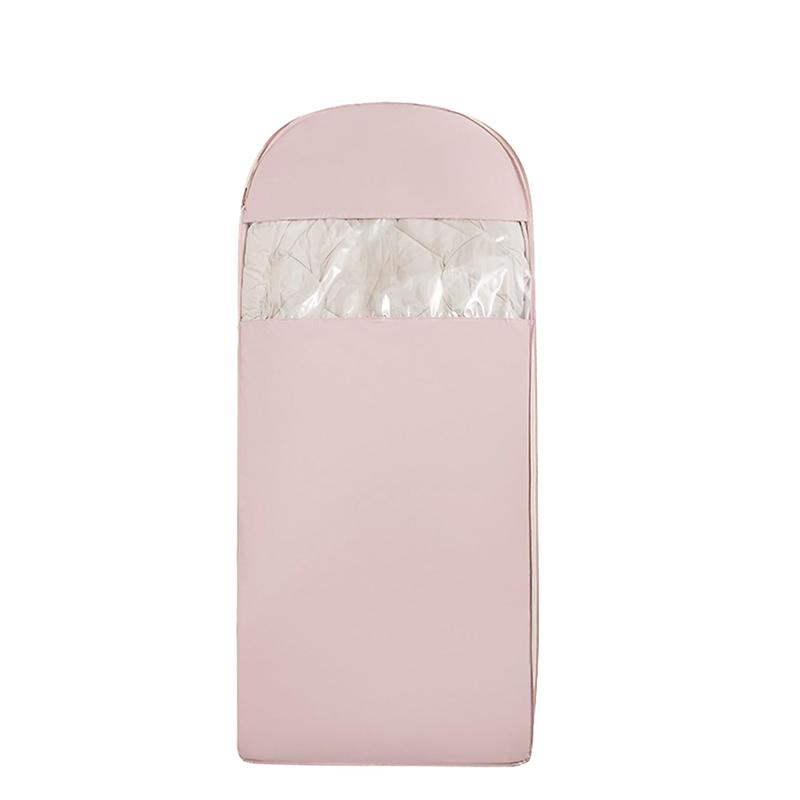
Hanging garment bags with transparent windows typically consist of a bag body fabric, a transparent window, a zipper or other opening mechanism, and a hanging structure. Depending on usage requirements, some models can also be equipped with handles, side openings, or other auxiliary features.
Compared with conventional clothing storage products, a transparent window is a key design feature of this type of garment bag. Users can directly view the clothing inside, making it easier to organize and manage items and to retrieve or place them daily; meanwhile, the bag provides a degree of protection for the clothing, reducing direct exposure to dust.
When selecting a product for procurement, you should determine the product dimensions, the location and size of the transparent window, fabric specifications, opening mechanism, and hanging method based on the type of garment, available installation space, and intended mode of use; avoid selecting a product solely based on its appearance or window area.
How to Properly Use a Hanging Garment Bag with a Transparent Window
Proper installation and placement of clothing help improve space utilization, prevent excessive localized stress from causing product deformation, and extend its service life.
Measure available space in advance
Before installation, measure the wardrobe’s height, width, and depth; check the stability of the horizontal rods; and allow sufficient space for placing and retrieving clothing as well as for opening and closing the wardrobe doors. At the same time, determine the size of the garment bags based on the length and thickness of the clothing to avoid excessive compression or insufficient space. When purchasing in bulk, the installation dimensions and usage requirements should also be included in the product specifications.
Correctly install the suspension structure
According to the product design, attach the hook or hanging strap to an appropriate support structure to ensure that the garment bag remains vertical, the hanging point is secure, and the load is distributed evenly. The actual load-bearing capacity also depends on the wardrobe crossbars and the fixing structure; therefore, the operating conditions should be assessed in conjunction with the weight of the garments.
Arrange different types of clothing appropriately
Arrange storage locations according to the length, thickness, and weight of the garments; avoid stacking items together, as this increases the load on fabrics, stitching, and hanging points. When procuring, determine the bag size and hanging configuration based on the type and weight of the target garments.
Make rational use of transparent windows
Transparent windows make it easy to identify and sort the garments inside the bag. When selecting a product, pay attention to the window’s location, size, and connection method; also inspect the flexibility of the transparent material, the stitching along the edges, and the overall structure to ensure that both visibility and durability are adequately addressed.
How to Choose the Right Hanging Clothing Bag with a Transparent Window
When selecting a product, it is necessary to take into comprehensive consideration clothing storage requirements, installation space, material performance, transparent window design, hanging structure, and target cost, rather than comparing price or bag dimensions in isolation.
How to determine product dimensions and garment capacity
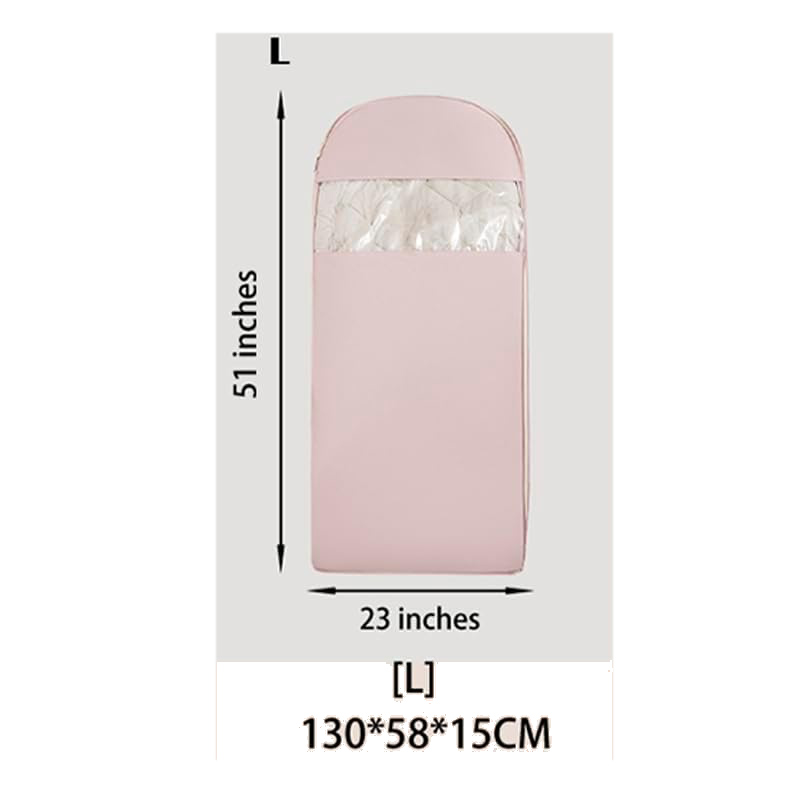
When determining the size of a clothing bag, first identify the installation space, the type of clothing intended for storage, and the number of items to be stored; then determine the product’s overall dimensions and internal space.
The procurement specifications shall include, at a minimum, the overall height, width, and depth of the product; internal usable space; opening dimensions; transparent window dimensions; and the packaging dimensions after folding.
It is important to note that the product’s overall dimensions do not equal the actual usable clothing storage space. Fabric thickness, seam finishes, zipper construction, and bag design all affect internal capacity.
For OEM/ODM customization projects, it is recommended that, prior to sample production, the dimensional drawings, the location of the transparent window, and the permissible deviations for critical dimensions be confirmed; the confirmed sample and the written specifications should then serve as the basis for subsequent production and acceptance inspection.
How to Choose the Right Fabric
The fabric affects the appearance, flexibility, wear resistance, maintenance requirements, and production costs of hanging garment bags.
Common options include polyester fabric, nonwoven fabric, and composite structures made from combinations of different materials. For transparent windows, an appropriate transparent material should be selected based on the product design.
| Fabric or material type | main features | Key considerations during model selection |
| Polyester fabric | Available in various grammages, colors, and surface finishes. | Wear resistance, sewing performance, and dimensional stability |
| non-woven fabrics | Lightweight, making it suitable for certain storage products where cost is a priority. | Tear resistance, deformation behavior, and reusability performance |
| apparent material | Convenient access to the clothing inside the bag | Transparency, flexibility, thickness, and edge connection method |
| Reinforced fabric structure | Suitable for areas requiring additional support | Changes in material usage, thickness, sewing difficulty, and cost |
No single fabric is suitable for all types of hanging garment bags; material selection should take into account the product’s intended use, the weight of the garments, the target price, and durability requirements. For example, the requirements for fabric specifications and structural reinforcement differ when storing lightweight garments such as shirts versus when storing thick outerwear.
Clothing bag manufacturer should determine the fabric composition, weight per unit area, color, transparent window material, and performance specifications based on actual requirements; they should not judge whether a material is suitable solely on the basis of its appearance.
For bulk procurement, the fabric composition, weight per unit area, color specifications, and thickness of transparent materials shall be clearly specified in the product specifications; requirements for wear resistance, tear resistance, and dimensional stability shall be determined based on the intended application; and testing methods and acceptance criteria shall be stipulated accordingly.
In addition, factors such as cutting waste, sewing complexity, material supply stability, and unit consumption must also be taken into account. Different materials and weights affect product cost, finished-product weight, and the volume of folded packaging; therefore, material–structure compatibility should be verified during the sampling stage.
What should be considered in the design of transparent windows
The transparent window is a key feature that distinguishes this type of hanging garment bag from ordinary fabric storage bags; its size, placement, and material directly influence the product’s visibility and overall appearance.
If the viewing window is too small, it may be difficult to clearly identify the clothing inside the bag; if it is too large, greater attention must be paid to the sewing quality at the junction between the transparent material and the bag body, as well as to the overall structural stability.
The following items should be verified during procurement:
- Window dimensions: Determine the window height and width based on the way the garments are displayed and the viewing requirements.
- Window position: Ensure that the window is positioned in a location that allows for easy viewing, so that the clothing, once folded or hung, does not completely obstruct the view.
- Transparent materials: specify the material type, thickness, transparency, and surface requirements
- Joining process: Inspect the stitching or joining points between the transparent material and the fabric to avoid noticeable wrinkles, loose threads, or uneven edges.
- Appearance requirements: Confirm whether the window has any obvious scratches, stains, creases, or other issues that may affect its display effect.
For custom projects, it is recommended to verify the window effect by actually installing the sample into clothing, rather than confirming dimensions and placement based solely on the graphic design layout.
How to evaluate the suspension method and load-bearing capacity
The load-bearing capacity of a hanging garment bag with a transparent window depends on the fabric, bag structure, sewing process, hanging assembly, and mounting support structure. When procuring such a bag, it is essential not only to clearly define the required load capacity but also to consider load distribution, testing methods, and acceptance criteria.
Before product development and bulk procurement, the following matters should be confirmed with the manufacturer:
- Define load requirements: Determine the load-bearing capacity based on the type and quantity of garments, as well as their total weight.
- Inspect the load-bearing areas: pay particular attention to the suspension straps, hook connection points, top of the bag body, and side seams.
- Determine the testing method: specify the loading method, load distribution, testing duration, and acceptance criteria
- Record test results: inspect for thread cracking, damage to the suspension points, and abnormal deformation of the bag body
- Verify the effectiveness of the improvements: after identifying weak points, adjust the materials or reinforcement procedures and retest
It should be noted that load-bearing values should be based on actual testing or reliable data and should not be arbitrarily guaranteed. For customized projects, it is recommended that load-bearing requirements, testing methods, and acceptance criteria be specified in the product specifications, serving as the basis for sample confirmation and mass production.
Does the zipper and opening design meet the functional requirements
The zipper is a key functional component of hanging garment bags; it determines how convenient it is to place and remove garments, and also affects the bag’s sealing performance.
When procuring, pay attention to zipper length, opening direction, zipper pull configuration, and stitching location. If the bag is intended for storing relatively long or thick garments, verify that the opening is sufficiently large to avoid excessive restrictions when placing or removing the garments.
During sample testing, repeatedly open and close the zipper to check for any jamming, misalignment, loose stitching, or deformation of the bag opening.
For different product designs, it should also be determined whether side openings, top openings, or other auxiliary structures need to be added. Functional configurations should be based on actual usage requirements, avoiding the addition of unnecessary structures and associated costs.
Key Design Considerations for Hanging Clothing Bags with Transparent Windows
For manufacturers and product developers, the quality of hanging garment bags with transparent windows depends on the effective integration of materials, structural design, and manufacturing processes.
Suspension Structure and Bag Stability
Hanging garment bags are subjected to the weight of clothing and hanging tension over extended periods; if the fabric, hanging components, and sewing construction are not compatible, issues such as bag deformation and cracking of the hanging straps are likely to occur.
Manufacturers should analyze the load-bearing locations based on actual usage conditions, make targeted adjustments to fabric specifications, hanging structures, and reinforcement processes, and verify the effectiveness through sample testing; they should also assess changes in material consumption, production costs, and packaging weight.
Transparent Window Connection Process to Fabric
The connection between the transparent window and the fabric is a key focus of production. Because the two materials differ in thickness and flexibility, the cutting dimensions and sewing process directly affect the appearance of the finished product.
During production, inspect whether the window edges are flat, whether the seams are evenly spaced, and whether there are any wrinkles or loose threads at the connections. For large-area transparent windows, the overall shape of the bag after unfolding and hanging should also be verified to prevent noticeable deformation of the window.
Suture Strength and Reinforcement at Critical Sites
During procurement acceptance, particular attention should be paid to stress-bearing areas such as the suspension straps, the top of the bag body, and the side edges, ensuring that seams are evenly distributed, connections are securely fastened, and there are no loose threads, thread breakages, or cracks. When necessary, load-bearing testing should be conducted to verify the effectiveness of the reinforcement; the connection strength must not be assessed solely based on visual inspection.
Dimensional Tolerances and Batch Consistency
Product dimensions directly affect installation compatibility and batch consistency. During procurement, the overall dimensions, the position and size of the transparent window, the opening dimensions, and the position of the hanging components should be verified.
Prior to mass production, the permissible deviations for critical dimensions and acceptance criteria should be clearly defined, and batch variations should be controlled through a unified measurement method and cutting specifications.
Material Testing and Quality Control
Quality inspection should cover both raw materials and finished products, with a focus on checking fabric specifications, transparent window materials, color, sewing quality, zippers, hanging components, product dimensions, and packaging markings.
For products subject to acceptance requirements, the testing methods, loading conditions, and acceptance criteria should be clearly defined in advance. For export items, it is also necessary to confirm the materials, labeling, and safety requirements applicable in the target market.
Prior to bulk procurement, it is recommended that the manufacturer establish unified inspection items, defect determination criteria, and shipment acceptance standards to ensure that the products comply with the confirmed samples and procurement specifications.
Key Considerations for Wholesale Procurement and OEM/ODM Customization
Product Specifications and Production Feasibility
Purchasers should clearly specify the product dimensions, internal space, location of the transparent window, fabric, zipper, hanging components, and storage capacity. Manufacturers should use this information to assess the structural design, material usage, production processes, and packaging method, and confirm the key specifications in advance.
Materials, Logo, and Packaging Requirements
Determine in advance the fabric, color, transparent window material, logo finishing, and processing method, and verify the final effect through samples. At the same time, specify the folding method, individual-item packaging, carton quantity, outer carton dimensions, and labeling requirements, while taking transportation costs into consideration.
Sample Verification and Quality Acceptance
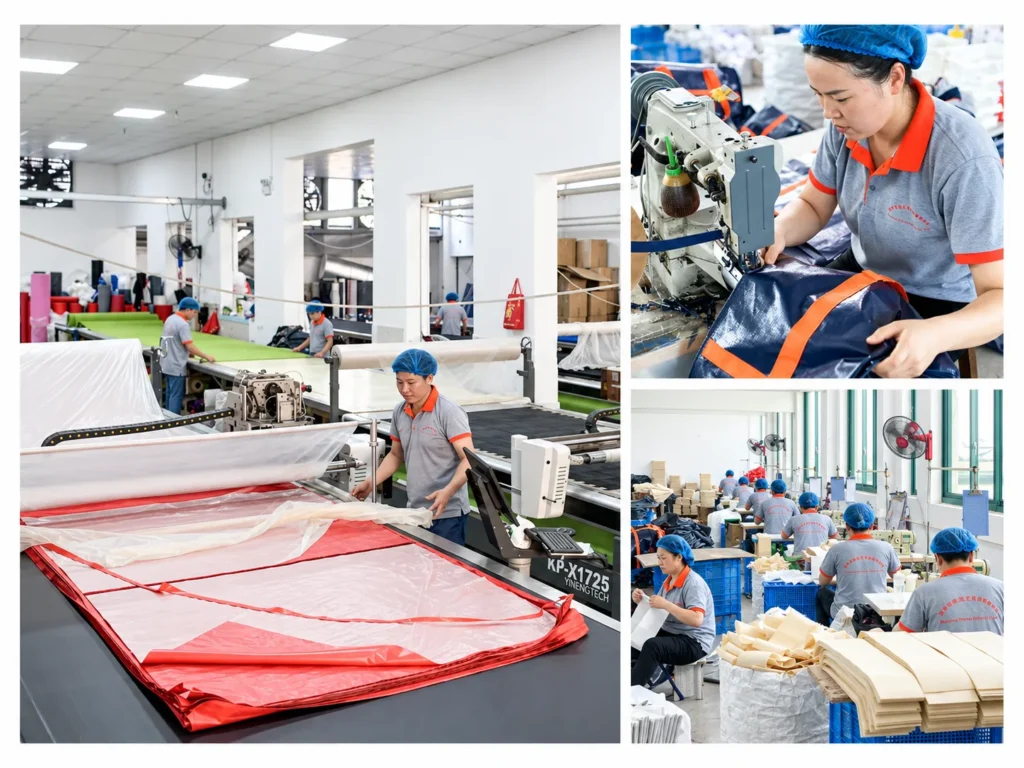
Prior to mass production, the sample, dimensional tolerances, material color, sewing quality, zipper, hanging structure, and packaging specifications must be verified. Where special performance requirements exist, the testing methods, inspection items, and acceptance criteria must also be clearly defined, and the written specifications shall serve as the basis for mass production.
Quotation, Minimum Order Quantity, and Lead Time
When requesting a quote, please provide the product specifications, purchase quantity, customization requirements, and packaging information, so that the manufacturer can assess costs, the minimum order quantity (MOQ), sample-making costs, and lead times.
When comparing Clothing bag supplier, ensure that the product configurations and quotation terms are consistent. For projects whose specifications have not yet been finalized, it is recommended that sample evaluation be completed first, followed by the determination of the quotation and mass-production plan, thereby reducing the costs and delivery lead-time risks associated with subsequent changes.
Frequently Asked Questions
What types of clothing are suitable for storage in a hanging garment bag with a transparent window?
Suitable for storing shirts, coats, trousers, and other garments that are appropriate for hanging storage. The specific dimensions and structure of the bag should be determined based on the length and thickness of the garments, as well as the number of items to be stored.
What is the purpose of a transparent window?
The transparent window makes it convenient for users to view the clothing inside the bag, reducing the need to open it repeatedly to search for items. The size and location of the window should be determined based on how the clothing is arranged and the user’s viewing needs.
Can hanging garment bags with transparent windows be customized to a specific size?
The bag dimensions, window positions, opening configurations, and hanging components can be adjusted based on wardrobe space, target garment sizes, and the number of items to be stored; specific specifications should be confirmed through a sample.
How can a hanging clothing bag ensure adequate load-bearing capacity?
Load-bearing capacity depends on the fabric, hanging components, sewing connections, and mounting support structure. Buyers should determine the testing requirements based on the actual weight of the garments and verify through sample testing that the structure meets the required performance needs.
What should be confirmed with the manufacturer before placing a bulk order?
The product dimensions, fabric specifications, transparent window material and location, zipper configuration, hanging structure, load-bearing requirements, quality acceptance criteria, packaging method, minimum order quantity, and delivery lead time should be confirmed.
Select the appropriate product based on actual clothing storage needs
When selecting a hanging garment bag with a transparent window, focus primarily on the product dimensions, storage capacity, fabric, transparent window, and hanging mechanism. For B2B procurement and OEM/ODM customization, it is also necessary to specify material specifications, logo application methods, quality standards, and packaging requirements.
Before procurement, product specifications should be confirmed based on actual usage requirements, and sample-based verification should be conducted to confirm dimensions, structure, and performance. Clarifying these details in advance enables manufacturers to accurately assess production costs, provide accurate quotations, and determine delivery lead times; it also reduces the need for specification changes during mass production and ensures consistency between product quality and batch production.