
The wardrobe compartments are packed with clothing, while the shelves are piled with towels and miscellaneous items; when you try to find something, you inevitably have to sift through other belongings. These storage issues usually stem not from a complete lack of space, but from the absence of a logical categorization system and suitable storage tools.
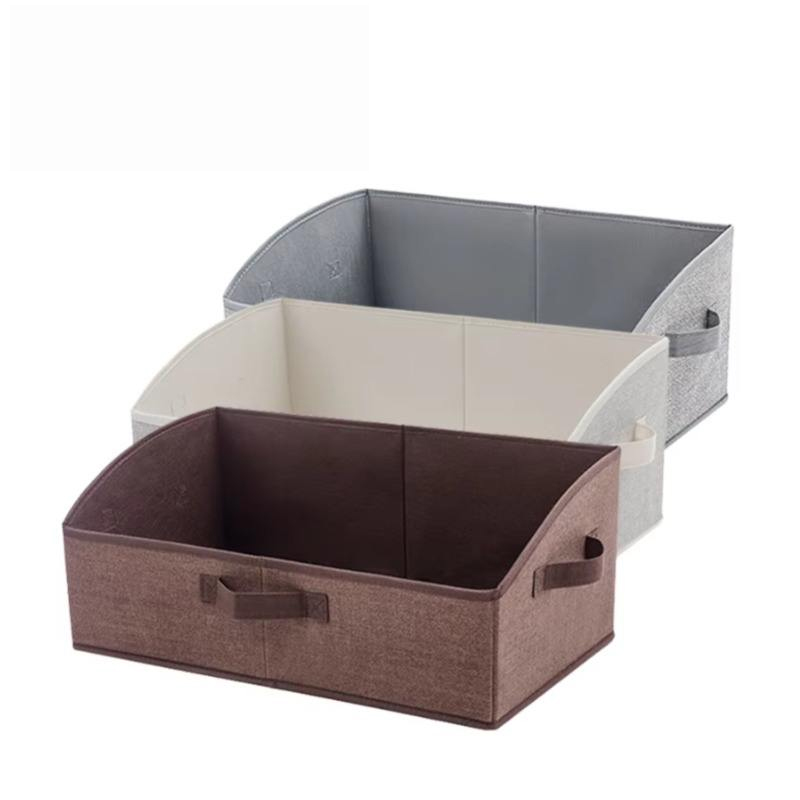
The trapezoidal fabric storage box is ideal for organizing clothing, toys, towels, and everyday essentials. Compared with simply stacking items directly, it keeps scattered belongings concentrated in a designated area; the side handles make it easy to retrieve and place items, while the foldable design minimizes the space occupied when the empty box is not in use.
However, a trapezoidal structure does not necessarily mean that it is more space-efficient than other storage boxes. What truly affects usability is whether the box dimensions match the intended storage locations, whether the internal space suits the shape of the items, and whether the box can maintain a reasonable shape after being loaded.
Best Uses for Trapezoid Fabric Storage Bins
Wardrobe compartments tend to become cluttered easily
If clothing, scarves, towels, and accessories are placed directly on the shelf, they can easily be taken out in a disorderly manner. By using a fabric storage box, items can be sorted by season, purpose, or family member, giving each type of item a designated place.
For example, place everyday clothing in easily accessible areas and store seasonal clothing together in a higher shelf. This not only reduces cluttered storage but also minimizes the need to repeatedly search through items when looking for something.
The width of the upper and lower sections of a trapezoidal cabinet may differ; therefore, before placing it in a wardrobe, you should verify that the top dimensions, bottom dimensions, and height are compatible with the compartment space, rather than making a purchase based solely on its appearance.
Items on the storage rack are difficult to categorize
Open storage organizers make items easy to access, but small items tend to be scattered, giving the overall layout a cluttered appearance. Fabric storage boxes allow items of the same type to be grouped together, making the storage system more organized.
If you need to place multiple boxes side by side, prioritize styles with compatible dimensions and plan the purpose of each box in advance. Store items that are used frequently in easily accessible locations, while items used infrequently can be placed in higher or deeper areas.
It should be noted that the inclined side of a trapezoidal cabinet affects the spatial relationship between adjacent cabinets. If the shelf width is limited, the number of units that can be placed should be calculated based on the actual dimensions, rather than simply estimated using the cabinet’s maximum width.
Empty boxes occupy storage space when idle
Storage boxes with a fixed shape still take up space when empty. For seasonal organization, temporary tidying, or situations where your home storage needs change frequently, foldable fabric storage boxes offer greater convenience and flexibility.
When not in use, you can fold the cabinet according to its structural design and store it in a wardrobe, storage room, or other dry location. Before making a purchase, verify whether the folding process is straightforward, whether the support components need to be removed, and whether the folded thickness is suitable for the intended storage conditions.
Trapezoidal Design: Benefits and Buying Factors
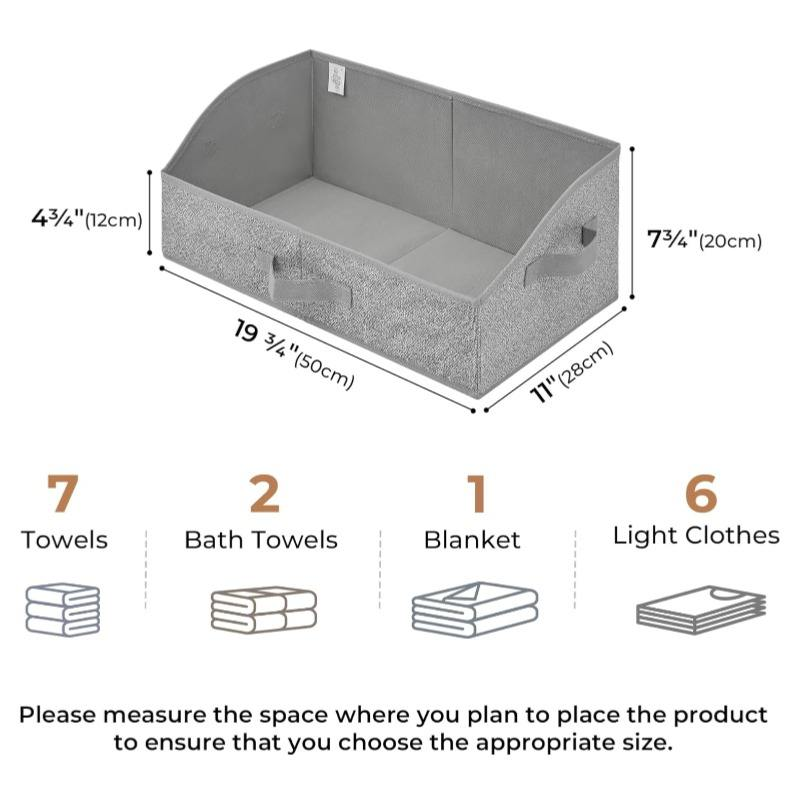
The primary feature of a trapezoidal fabric storage box is that its top and bottom widths differ. This design offers flexibility in how the items are arranged; however, whether it is truly practical depends on the specific storage scenario.
If the upper section of the box is relatively wide, a larger opening may make it easier for users to place or retrieve items; if the box needs to be placed in a compartment with a fixed size, it must be confirmed that the wider end will not obstruct placement.
Therefore, before making a purchase, you should pay particular attention to checking three key dimensions:
- Top width: Determines the space occupied by the box opening and whether the box can be placed side-by-side with adjacent items
- Bottom width: affects the placement of the box bottom and the available space
- Cabinet height: Determines whether the storage compartment can fit into the shelf and whether items placed inside are easy to access
In addition, it is important to distinguish between the external dimensions of the box and its internal usable dimensions. Fabric, support components, and sewing structures all occupy a certain amount of space; therefore, actual load capacity should not be determined solely based on external dimensions.
If you plan to store relatively large items such as clothing, toys, or towels, first confirm whether they can fit naturally into the box; do not overstuff it simply to maximize capacity. A box that is too full not only makes items harder to retrieve and place, but may also affect the item’s shape after it has been folded or unfolded.
The handle design makes the storage box easier to access and place
When storage boxes are typically placed deep inside wardrobes, beside the bed, or on the lower shelves of storage racks, the handles make it easier for users to pull the box out or move it. In situations where clothing and household items need to be organized frequently, this design is more practical than simply pursuing aesthetic appeal.
When selecting a storage box, check the position and length of the handle, as well as the available gripping space. Whether the handle is easy to use depends not only on its size but also on where the box is placed. For example, when a storage box is placed in a narrower compartment, the handle should be easy to grip without interfering with the box’s normal placement.
The connection between the handle and the box body should also be examined in particular. After items are placed inside, the pulling force generated when lifting is transmitted to the connection point; therefore, attention should be paid to whether the stitching, fabric, and connection structure are suitable for the intended use.
If the box is primarily intended for storing lightweight clothing and towels, the convenience of everyday access is usually sufficient; if you plan to store books, tools, or other heavier items, you should verify the product’s actual load-bearing capacity. You cannot assume that a storage box is suitable for heavy items simply because it has handles.
How can a foldable structure and box-based support be balanced
A foldable design can reduce the space occupied by the empty box; however, when the storage box is unfolded, it must also maintain a reasonable shape. These two requirements must be considered together.
If the storage box is primarily intended for holding clothing, towels, and other lightweight items, a lightweight and easily foldable design may better meet the needs. If you want the storage box to sit on an open shelving unit while maintaining a neat appearance when loaded, you should pay attention to the support provided by the sides and bottom.
When selecting a storage box, you can observe whether it can naturally stand upright when unfolded, whether its bottom is level, and whether its sides tend to lean inward easily. You can also actually place the items intended for storage inside the box to see whether any noticeable deformation occurs.
If a product relies on detachable supports to maintain its shape, it should also be verified whether assembly and disassembly are convenient, whether the supports are easy to store, and whether any additional steps are required when folding. For everyday household use, a simple structure and intuitive operation generally make it easier for users to continue using the product over time.
It should be noted that fabric storage boxes are not necessarily suitable for all types of heavy items. A box’s actual load-bearing capacity depends on the fabric, stitching, base structure, and product design; it cannot be judged solely based on its appearance or the name of the material used.
How should different items be arranged in storage locations
A suitable storage box can help with sorting, but the effectiveness of organization still depends on how the items are grouped. It is recommended that you organize them first by purpose, and then decide where to place each box.
- Clothing and towels: These can be sorted by season, frequency of use, or family members. Frequently worn items should be kept in easily accessible locations, while seasonal clothing should be stored together to reduce the need for daily searching.
- Toys and children’s products: Group similar toys together and avoid scattering small items throughout the room. If a box is placed in a location that children can access and use independently, ensure that it is stable and avoid placing excessively heavy items inside it.
- Accessories and everyday items: scarves, hats, spare supplies, and similar items can be stored separately by category. If small items tend to get mixed together, you can use small bags or internal categorization to help keep them organized.
- Seasonal items: Items that are not needed for the time being can be stored together in a higher or deeper storage area. Before storing them, ensure that the items are clean and dry; avoid placing damp items in fabric storage containers for extended periods.
Regardless of the type of items you store, it is not advisable to fill every available space. Leaving adequate clearance for access and storage reduces item crowding and makes the compartment easier to close, move, or fold.
Daily Maintenance of Fabric Storage Boxes
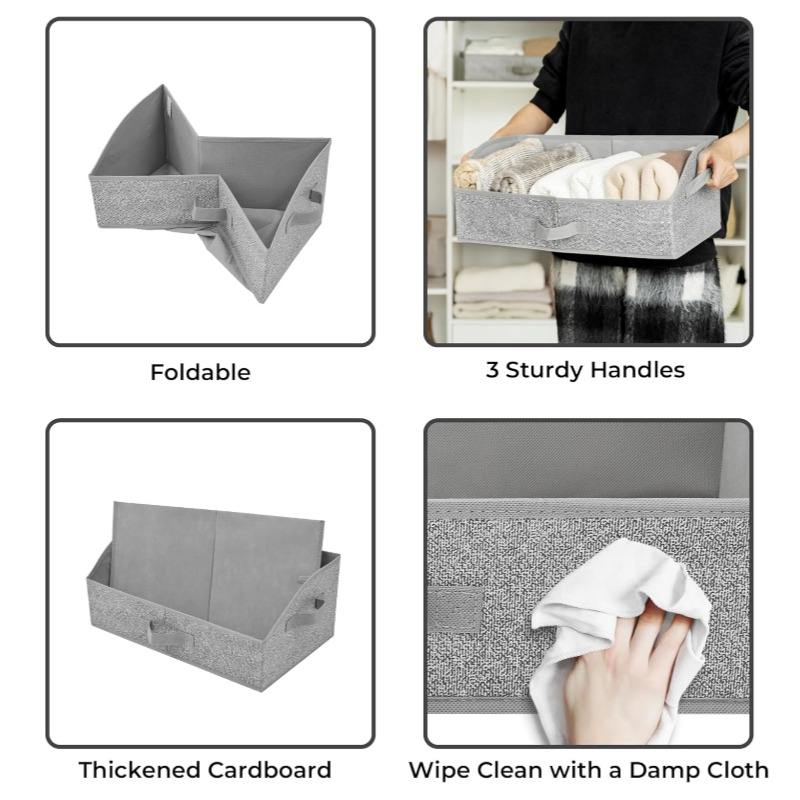
The cleaning method for fabric storage boxes depends on the fabric material and the product’s construction. During routine use, regularly remove surface dust and promptly treat any stains. If the product does not explicitly state that it is machine-washable, do not immerse and clean the entire box directly.
After cleaning, allow the items to dry completely before folding them or returning them to the cabinet. Keeping damp items in fabric storage boxes for extended periods may cause odors or affect the condition of the materials.
If, after prolonged use, the storage box develops a loose handle, cracked stitching, or damaged support structure, it should be inspected promptly, and no heavier items should be placed inside it. When folding and storing the box, avoid placing heavy objects on it for extended periods, as this may affect its subsequent unfolding and use.
How Brand Owners and Buyers Can Select the Right Products
For home organization brands, retailers, importers, and wholesale buyers, developing trapezoidal fabric storage boxes requires the simultaneous consideration of intended use, dimensional design, material composition, and packaging requirements.
First, it should be clearly defined what items the product is primarily intended to store, as well as where target consumers typically place the box. Wardrobe compartments, open shelving units, and storage rooms have different requirements regarding box dimensions. For a trapezoidal structure, the top, bottom, and height should all be included in the specification confirmation; a single width measurement should not be used as a substitute for the overall dimensions.
Secondly, the fabric, support method, and handle structure should be selected based on usage requirements. If the product emphasizes foldable portability, it is necessary to verify the folding process and the volume after storage; if neatness in arrangement is the priority, the product’s shape after the compartment is unfolded and its bottom support should be inspected.
During sample verification, the actual target item may be used for loading to check whether the enclosure fits within the designated space, whether the handle is easy to grip, whether the side exhibits obvious deformation, and whether folding and unfolding proceed smoothly. The test results shall be consistent with the written specifications.
Before mass production, it is recommended that the critical dimensions, materials, colors, handle placement, support structure, folding method, and packaging requirements be clearly defined. If the fabric, structure, or critical dimensions are subsequently changed, these changes should be re-evaluated to determine whether they affect the user experience.
Packaging should not be addressed only after production has concluded. The folded dimensions affect the packaging of individual products, the capacity of outer cartons, and available transport space. Planning the packaging method in advance helps coordinate the needs of warehousing, transportation, and retail display.
Frequently Asked Questions
Are trapezoidal fabric storage boxes more space-efficient than square storage boxes?
Not necessarily. Whether a trapezoidal structure is suitable depends on its placement, the vertical dimensions of the cabinet, and the shape of the items. You should measure the actual available space before purchasing.
Will the foldable fabric storage box deform after being unfolded?
This depends on the fabric, support structure, and loading conditions. If the enclosure needs to maintain a regular shape, particular attention should be paid to the support design at the bottom and on the sides.
Is a storage box with a handle suitable for carrying heavy items?
The intended use should not be determined solely based on the handle; rather, it should be selected in conjunction with the fabric, stitching, cabinet structure, and the actual load-bearing test results of the product.
What should you verify most before making your purchase?
First, confirm the items to be stored and their placement; next, verify the top and bottom of the storage unit as well as its height dimensions; finally, check whether the handles, support structure, and folding mechanism meet the required usage needs.
Maximize the utility of every storage space
The trapezoidal fabric storage box is ideal for sorting and organizing clothing, toys, and everyday miscellaneous items. Its well-designed dimensions allow the box to fit comfortably into available space; the handles make it easier to retrieve and place items; and the foldable structure minimizes the space occupied when the empty box is not in use.
When making a purchase, rather than focusing solely on capacity and appearance, it is better to first clarify the intended storage purpose and placement location, then check the dimensions, support structure, and folding mechanism. For bulk procurement projects, completing sample verification and specification confirmation in advance can also ensure that the product better meets actual usage requirements.