
Small pieces of jewelry, such as rings, earrings, and pendants, are relatively compact; during packaging and everyday storage, they are prone to colliding with one another, becoming entangled, or making it inconvenient to remove or place them back in their containers. For jewelry brands, gift suppliers, importers, and retailers, jewelry packaging must not only meet basic storage requirements but also take into account aesthetic appeal, product protection, and brand presentation.
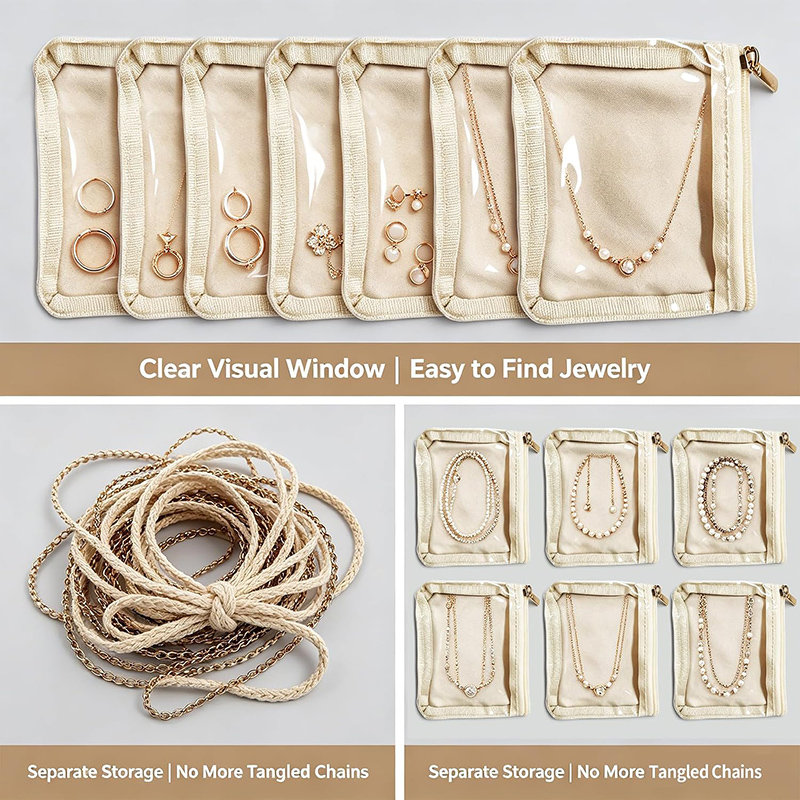
The velvet zipper jewelry pouch is a storage solution for small-piece jewelry packaging and organization. Boasting a fine velvety texture and a zipper-closure design, it creates relatively independent storage space for rings, earrings, pendants, and other accessories. Its pouch dimensions, inner fittings, fabric colors, and brand embellishments can be adjusted according to application purposes to meet the demands of diverse sales channels.
For B2B buyers, visual appearance is only one aspect of product development. Pouch dimensions, velvet fabric, inner lining, internal structure, zippers, and stitching craftsmanship all affect the end-user experience. Defining these specifications upfront and validating them via samples reduces adjustments and communication costs in subsequent production.
Primary Application Scenarios for Velvet Zipper Jewelry Pouches
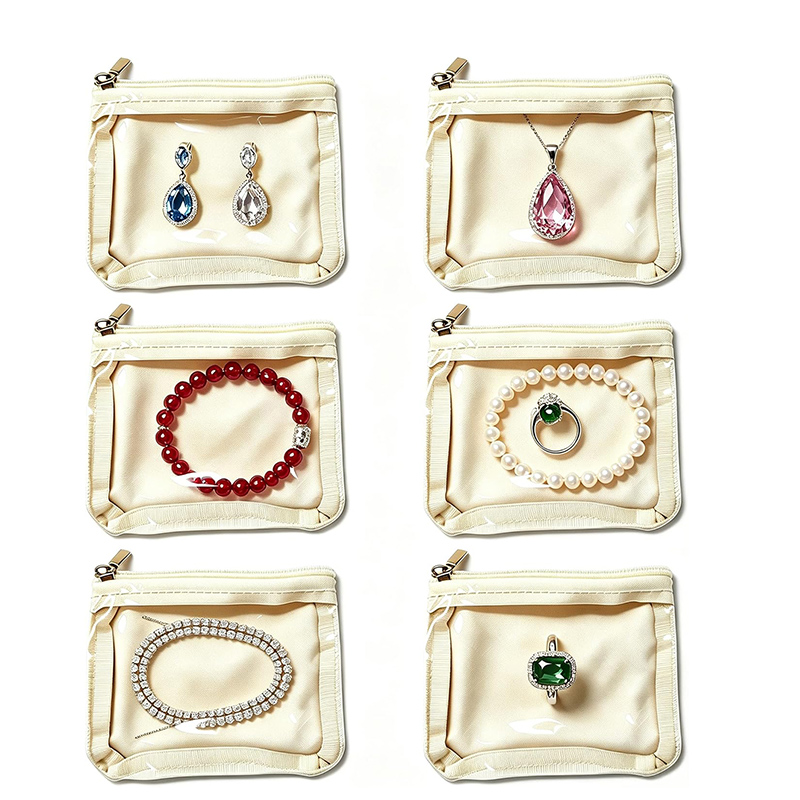
Velvet zipper jewelry pouches work well for packaging and storing rings, earrings, pendants, and other small jewelry. Fabric colors, pouch sizes, internal structures, and brand decorations can be modified based on sales channels and product positioning.
Jewelry Brand Product Packaging
Packaging constitutes a key consumer touchpoint for jewelry brands. While jewelry design and craftsmanship shape the purchasing experience, the jewelry pouch color, fabric, and fine details also define overall brand perception.
Velvet features a delicate tactile finish, making it ideal for packaging rings, pendants, and miniature jewelry accessories. Brands may select colors such as black, burgundy, navy blue, or custom brand-specific hues aligned with product collections. Brand recognition can be enhanced through logo printing, embroidery, or custom labels.
If a brand mainly sells rings, inner ring holders or fixed slots may be added subject to product specifications. For businesses focusing on earrings and pendants, storage layouts should be planned around jewelry shapes and quantities. Internal structures ought to be tailored to actual merchandise rather than adopting one-size-fits-all configurations.
Gift and Wedding Packaging
Rings and small jewelry pieces are frequently used as gifts for birthdays, anniversaries, weddings, and holidays. Velvet zipper jewelry pouches provide independent packaging space for jewelry, and the zipper design makes it easy for consumers to open, close, and access items.
For gift suppliers, product colors and appearances need to match the sales theme. If the jewelry pouch is sold in combination with a jewelry box or gift box, the external dimensions of the pouch should be measured in advance, and the space inside the gift box should be checked to ensure a proper fit, preventing an oversized pouch or folding issues from affecting the overall packaging presentation.
Everyday and Travel Jewelry Storage
Daily and travel use focus more on the portability, opening range, and internal space of the jewelry pouch. The zipper closure reduces the possibility of jewelry slipping out from the pouch opening, and the internal storage areas can be adjusted according to the jewelry type.
If items other than rings—such as earrings, pendants, or other small accessories—need to be stored, the pouch dimensions and internal layout should be re-planned based on the actual storage quantity. For products that need to accommodate multiple types of jewelry simultaneously, attention should also be paid to whether different accessories are prone to tangling or squeezing each other.
It should be noted that the softness of velvet fabric does not mean the product possesses rigid crush-proof or shock-proof capabilities. If the jewelry is of high value or has higher requirements for transportation and storage protection, the inner lining and other support configurations should be evaluated based on actual needs.
Internal Storage Structure Influences Usability
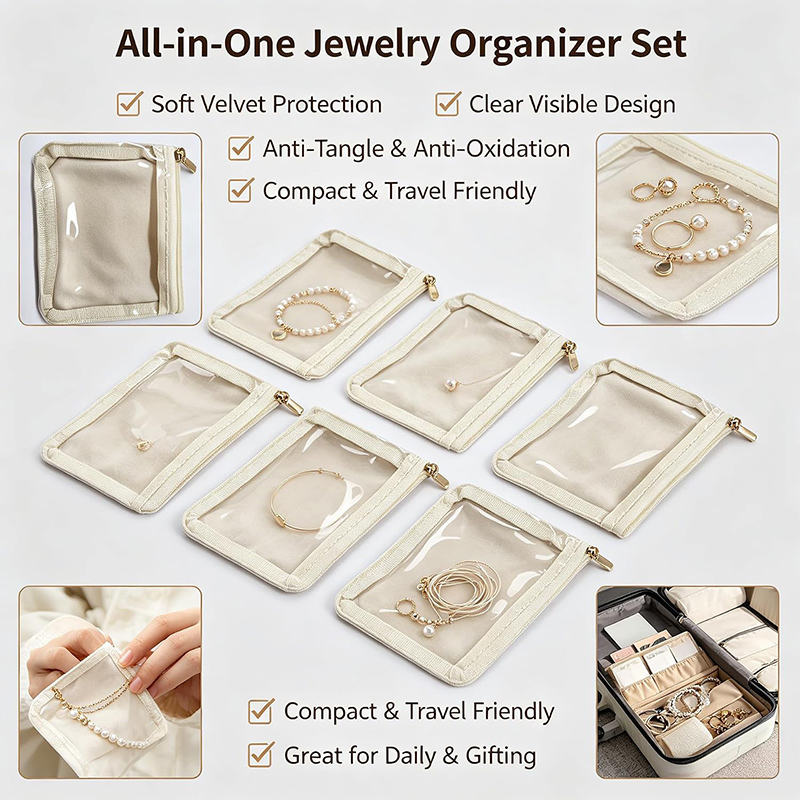
The internal structure of a velvet zipper jewelry pouch needs to be planned based on the primary items being stored. Different pieces of jewelry vary in size, shape, and quantity, and whether the internal space is reasonable directly affects the user’s storage experience.
Planning Internal Space According to Jewelry Type
Rings, earrings, and pendants differ in size and shape, and their requirements for storage space also vary.
- Rings: Usually require relatively fixed placement locations to avoid random movement inside the pouch. If the product is mainly used for ring packaging, adding a ring holder or fixed slots can be considered, and specific specifications should be determined based on the width, quantity, and style of the rings.
- Earrings: Diverse in types, including studs, hoops, and drop earrings. If multiple pairs of earrings need to be stored simultaneously, confirm in advance whether the internal space is sufficient and whether independent storage locations are needed.
- Pendants and Necklaces: Require attention to chain length and placement method. If there is no reasonable fixing or dividing design inside the pouch, chains may tangle with each other during storage. Therefore, for necklace products, the necessity of adding fixing straps or independent storage areas can be evaluated based on actual usage requirements.
Matching Internal Configuration with Pouch Dimensions
The internal structure cannot be designed independently of the pouch body. Adding ring holders, dividers, or fixing straps will consume a certain amount of internal space and may also affect the thickness of the pouch and zipper closure.
If the product is mainly used for single-piece jewelry packaging, a relatively simple internal configuration can be adopted; if multiple types of jewelry need to be stored simultaneously, the internal space should be re-evaluated based on the jewelry quantity, size, and placement method.
Buyers should first determine the primary type of jewelry to be stored, and then combine the length, width, thickness, and opening range of the pouch to determine the internal layout. For styles with ring holders or other fixed structures, it is also necessary to check whether the installation position is reasonable and whether it affects the storage of other jewelry.
Balancing Ease of Access in Internal Structures
The jewelry pouch not only needs to accommodate the target product but should also make it convenient for consumers to take out and organize items.
If the internal space is too compact, fingers may be difficult to insert into the pouch; if there are too many internal configurations, it may increase the complexity of storage and access. Therefore, design should combine the size and usage frequency of the target jewelry to judge whether adding dividers, fixing straps, or other storage configurations is necessary.
During sample confirmation, actual jewelry can be placed into the pouch to check whether access is convenient, whether different accessories easily interfere with each other, and whether the pouch body bulges significantly after zipper closure.
Key Design Details of Velvet Zipper Jewelry Pouches
In addition to the internal structure, the fabric, inner lining, zipper, and pouch dimensions also affect the practical performance of the velvet zipper jewelry pouch. Configurations should be confirmed based on product positioning and target jewelry types during procurement.
Velvet Fabric and Inner Lining Configuration
Velvet fabric is an important component of the product’s appearance and tactile feel. Attention should be paid to the fabric type, pile texture, thickness, color, and surface condition during procurement. Different fabric specifications will affect the product’s appearance, hand feel, and cost.
For products emphasizing gift packaging effects, the flatness of the fabric surface, pile status, and color expression can be focal points of inspection; for jewelry storage pouches requiring frequent opening and closing, attention should also be paid to the appearance changes of the fabric under daily friction conditions.
Whether an inner lining needs to be added should be decided based on the jewelry type and product positioning. If rings are mainly stored inside the pouch, inspect the contact condition between the internal structure and the pouch body; if earrings and pendants also need to be stored, evaluate whether the inner lining helps reduce direct friction between the jewelry and the pouch body.
During sample confirmation, inspect whether the fabric has obvious shedding, stains, damage, or color differences. For dark velvet products, also note visual color variations that may arise from the pile direction to avoid inconsistent appearance performance across different batches.
Zipper Structure and Opening Design
The zipper determines the opening and closing method of the jewelry pouch and also affects the convenience for consumers when accessing jewelry.
If the zipper opening is too short, fingers may be difficult to insert into the pouch, especially when ring holders or other storage structures are set inside. If the opening range is reasonable, consumers can more conveniently put in or take out jewelry.
Procurement should confirm the zipper length, opening direction, puller configuration, and stitching position. During sample testing, opening and closing operations can be performed repeatedly to observe whether there are jams, zipper misalignment, loose stitches, or pouch opening deformation.
Custom projects can also select zipper colors and puller appearances according to brand design, but decorative configurations must not affect the normal use of the zipper. The connection position between the zipper and the velvet fabric should also be kept neat to prevent obvious wrinkles or uneven stitching.
Pouch Dimensions and Internal Capacity
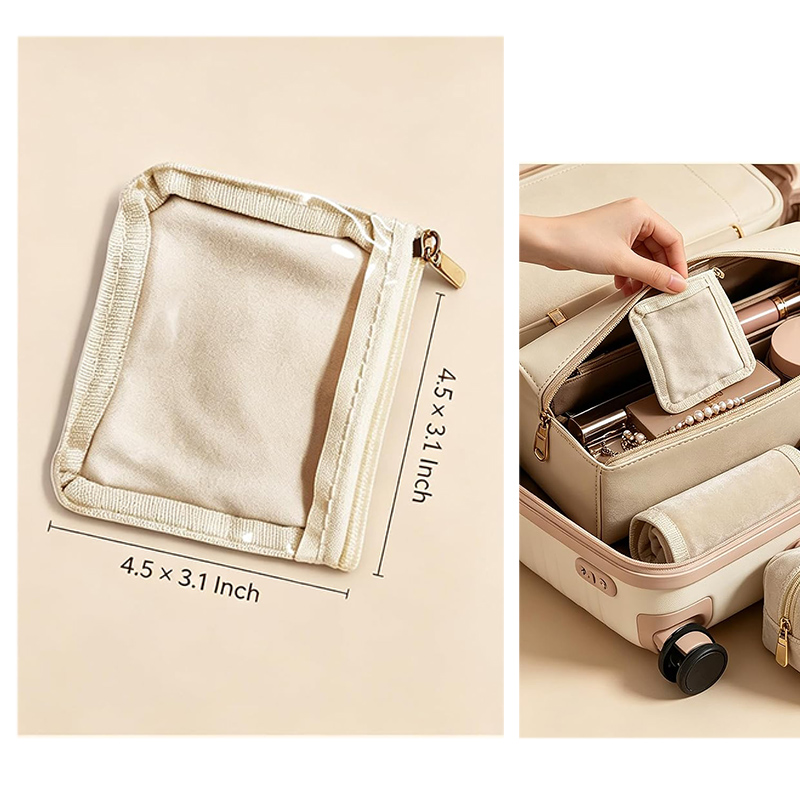
The dimensions of the velvet zipper jewelry pouch need to be determined in combination with actual jewelry specifications. Single-ring packaging usually does not require excessive space, but if the product also needs to accommodate earrings, pendants, or other accessories simultaneously, the pouch dimensions and internal layout should be re-evaluated.
Buyers can first measure the maximum length, width, and thickness of the target jewelry, and then consider the space occupied by the inner lining, ring holders, and other internal structures.
If the product is used for gift packaging, confirm whether the jewelry pouch fits properly when placed inside the outer gift box; if used for travel storage, both carrying space and access convenience need to be balanced.
Do not judge internal capacity solely based on the external dimensions of the pouch. Fabric thickness, seam allowances, inner linings, and internal configurations will all occupy actual space, and final confirmation should be based on the internal dimensions and actual loading effect of the completed sample.
Designing Internal Configurations Around Main Jewelry Types
Velvet zipper jewelry pouches can adopt different internal configurations. For ring-centric products, setting up ring holders can be considered; for small accessories like earrings and pendants, independent storage positions can be planned according to actual needs.
However, the more complex the internal structure, the higher the development and production requirements may be. Before adding dividers, fixing straps, or other configurations, evaluate whether they truly help the target consumer use the product, avoiding unnecessary structures and costs.
Product Configuration Focus by Sales Channel
Velvet zipper jewelry pouches can be applied across channels such as jewelry brands, gifts, retail wholesale, and travel storage. Different sales methods focus on different aspects of product configuration, and buyers should determine specific specifications based on target customers.
Jewelry Brands: Focus on Brand Image and Product Matching
Jewelry brands usually need to maintain visual consistency between packaging and product lines. In addition to the color and texture of the velvet fabric, the position, size, color, and production technique of the logo should also be confirmed.
If the brand primarily sells rings, ring holders can be used as an optional internal structure, determining slot specifications based on the target ring size; if the product line includes multiple types of jewelry, corresponding pouch specifications and internal configurations should be planned based on the size and packaging requirements of different products.
Gift Suppliers: Focus on Display Effects and Packaging Combinations
The gift channel pays more attention to the overall presentation of the product. Velvet zipper jewelry pouches can be combined with jewelry boxes, gift boxes, or other packaging accessories.
Procurement should confirm the external dimensions, packaging status, and combination methods of the jewelry pouch in advance, and check whether the pouch body is easy to take out through actual boxing trials, avoiding impacts on the overall presentation of the gift packaging.
Retail and Wholesale Channels: Focus on Specification Standardization
For bulk-sold products, specification consistency and packaging efficiency are very important. Pouch dimensions, colors, internal configurations, and zippers across different batches should remain stable.
If you plan to offer multiple colors or sizes, it is recommended to establish a product specification sheet in advance, clarifying the fabric, dimensions, and internal configuration corresponding to each model to reduce confusion in order production and warehouse management.
Travel Storage Products: Focus on Portability and Internal Organization
Travel jewelry storage pouches need to balance portability and internal space. The pouch body should not merely pursue a compact appearance; it should also confirm whether the zipper opening is convenient, whether the internal storage structure is easy to use, and whether there is still enough space after placing other small jewelry pieces.
If the product is positioned for travel use, the pouch dimensions and internal configurations should be determined based on actual carrying methods, and storage, access, and closure effects should be checked via samples.
Specifications to Confirm When Procuring Velvet Zipper Jewelry Pouches via B2B
For brand owners, importers, wholesalers, and retailers, clarifying product specifications before procurement helps reduce uncertainties in sample modifications and mass production communication.
If the buyer has not yet determined the final structure, they can first provide the supplier with the actual dimensions, product pictures, and usage scenarios of the target jewelry, allowing the supplier to evaluate pouch dimensions and internal configurations.
For logo-customized velvet zipper jewelry pouches, it is also necessary to confirm in advance whether the printing or embroidery technique is suitable for the selected fabric, and check pattern placement, clarity, and visual effects through samples.
Quotations should also standardize product specifications as much as possible. Different fabrics, internal structures, zippers, and packaging methods will all affect costs, and unit prices should not be compared solely based on product names or appearance similarities. Price comparisons have more reference value only on the basis of consistent primary materials, structures, and packaging requirements.
Sample Confirmation and Quality Control for Mass Production
For velvet zipper jewelry pouches, simply checking the sample’s appearance is not enough. Buyers also need to confirm whether the structure meets the usage requirements of the target product through actual loading and operation.
Checking Dimensions and Internal Space
First, verify the external dimensions of the pouch, available internal space, and internal configuration specifications. Place the target jewelry into the pouch and observe whether it is easy to put in and take out, and whether different pieces of jewelry are prone to colliding or tangling with each other.
If the product needs to store multiple types of jewelry simultaneously, representative rings, earrings, or pendants should be used for testing, avoiding confirmation of the entire pouch structure using only a single product.
Checking Internal Structure and Zipper Operation
If the product features ring holders, dividers, or fixing straps, check whether their connection positions are accurate and free from obvious skewing or looseness. After placing jewelry, check whether the internal configuration shifts and whether there is still sufficient space inside the pouch.
Subsequently, perform zipper opening and closing operations repeatedly to check whether pulling is smooth, whether the pouch opening deforms, and the stitching conditions at both ends of the zipper, corners, and fabric connections.
Checking Fabric and Appearance Consistency
Check whether the velvet surface is flat and free from obvious shedding, stains, damage, or color differences. For customized products, also confirm whether the logo position, size, color, and technical effect match the approved sample.
If multiple colors are procured, samples for each color should be confirmed separately; final effects for all products should not be judged based on just one color.
Confirming Packaging and Mass Production Standards
Once samples pass, use the confirmed sample together with written specifications as the production basis. Written documents should include pouch dimensions, fabric materials, colors, internal configurations, zippers, logos, and packaging requirements.
During mass production, focus on inspecting pouch dimensions, internal structures, zipper operation, stitching, and appearance quality. Products across different batches should be inspected according to confirmed specifications to avoid structural or appearance variances.
If adjustments are made to the fabric, internal structure, or critical dimensions, re-evaluate whether internal space, jewelry storage, and zipper closure are affected, and re-confirm samples when necessary.
If products are destined for export or specific retail channels, applicable materials, labels, and packaging standards should also be confirmed based on target market and customer requirements. Products should not default to meeting certain certifications or standards without verification.
FAQ
What types of jewelry are suitable for velvet zipper jewelry pouches?
They are suitable for packaging and storing rings, earrings, pendants, and other small jewelry pieces. Specific dimensions should be determined according to jewelry specifications.
Can the internal structure of velvet zipper jewelry pouches be customized?
Yes. Configurations such as dividers, fixing straps, or ring holders can be evaluated and added based on jewelry types and quantities, and the specific structure needs to be confirmed via samples.
Do velvet jewelry pouches need an inner lining?
It depends on the jewelry type and product positioning. If higher requirements are placed on internal protection or the storage experience, the necessity of adding an inner lining can be evaluated.
Can logos be customized on velvet zipper jewelry pouches?
Yes. Printing, embroidery, or other identification techniques can be evaluated based on fabric and brand requirements, and final effects can be confirmed during the sample stage.
What needs to be confirmed before bulk procurement?
Key elements to confirm include pouch dimensions, velvet fabric, internal configurations, zippers, logo techniques, and packaging methods, followed by validation through samples before arranging mass production.
Adapting Product Structure to Actual Storage Demands
A practical velvet zipper jewelry pouch requires not only soft fabric and a neat appearance, but also reasonable pouch dimensions, an internal layout suited to the target jewelry, and a smooth, reliable zipper configuration.
For B2B procurement projects, starting from actual jewelry specifications and sales scenarios, clarifying fabric, internal structure, zipper, and brand customization requirements, and then confirming production standards through sample testing and written specifications are essential. Connecting sample confirmation, specification recording, and mass production inspection allows velvet zipper jewelry pouches to meet packaging and storage demands while maintaining consistency in mass production.